Voices from the Gaps: The Tennessee Archivists Piecing Together Lives History Left Behind
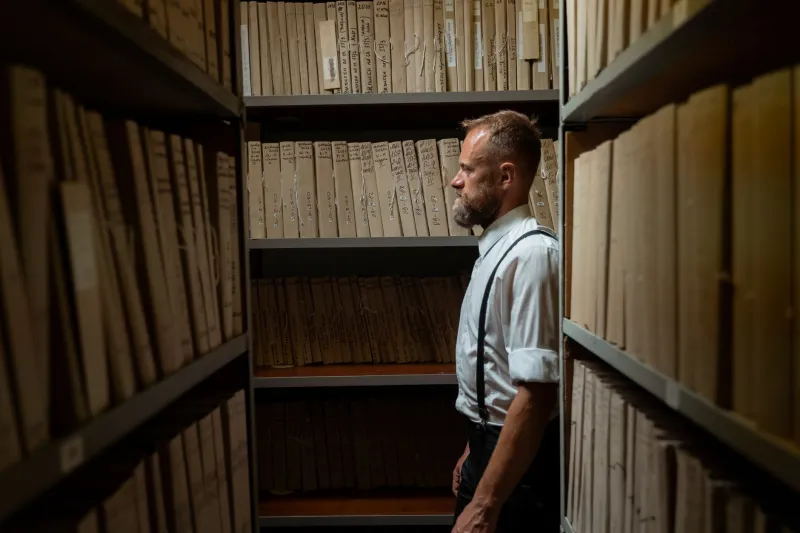
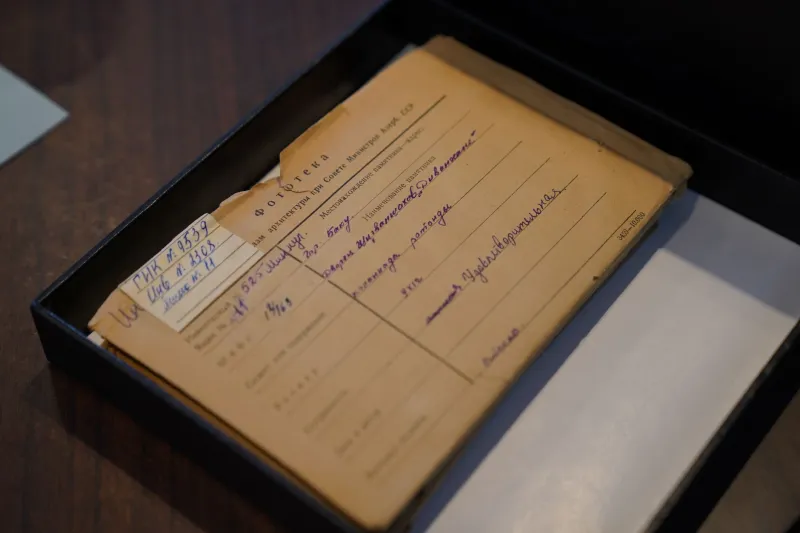
Somewhere in a church basement in Weakley County, there's a ledger that nobody looked at for sixty years. It logs baptisms, deaths, and marriages in faded pencil — names of sharecroppers, freedmen, and their children, written in columns that no county courthouse ever bothered to copy. To most people, it's just an old book. To Denise Caldwell, a retired schoolteacher turned amateur archivist, it's everything.
"These people existed," she says, smoothing a protective sleeve over one of the pages. "They had children they loved and debts they worried about and songs they sang. The least we can do is say their names out loud."
Denise is part of a loose but growing network of Tennesseans — some credentialed, some entirely self-taught — who are quietly transforming how we understand this state's past. They're not waiting on universities or government agencies to fill in the blanks. They're doing it themselves, one cemetery survey, one oral history recording, one digitized photograph at a time.
What Gets Left Out
Official history has always had a selection problem. Court records, census data, and newspaper archives tend to reflect the lives of people with property, political standing, or social visibility. Everyone else — enslaved people, Indigenous residents, recent immigrants, tenant farmers, domestic workers — often shows up only as footnotes, if at all.
In Tennessee, that gap is enormous. The state's history runs through Cherokee removal, the Civil War, Reconstruction, the Great Migration, and waves of immigration from Ireland, Germany, Italy, and later from Latin America and Southeast Asia. Each of those chapters left behind communities whose stories were systematically underdocumented.
"The records exist," says Marcus Webb, a genealogist based in Nashville who specializes in African American family histories. "They're just scattered. A name in a probate file here, a mention in a church roll there, a photograph with no label in somebody's attic. Our job is to connect the dots."
Marcus has spent the last decade building a database of freedom papers, Freedmen's Bureau records, and post-Reconstruction land deeds that document the lives of Black Tennesseans in the years immediately following emancipation. It's painstaking work — cross-referencing names across multiple document types, accounting for spelling variations, tracing family lines that were deliberately broken by slavery and then further fragmented by economic displacement.
Cemeteries as Archives
One of the most powerful tools these researchers use isn't digital at all. It's a pair of boots and a willingness to walk into overgrown fields.
Across rural Tennessee, there are thousands of family and community cemeteries that have been absorbed by farmland, forest, or development. Many of them mark the graves of people whose names never appeared in any government record — enslaved individuals buried without markers, Indigenous people interred on ancestral land, immigrants who died before they could be naturalized.
Linda Thurston, who coordinates cemetery documentation projects for a historical preservation group in East Tennessee, says the work is both physically demanding and emotionally heavy.
"You push through briars for an hour and then you find a field of fieldstone markers — no names, just stones — and you know that somebody put each one of those there because they were grieving," she says. "That matters. That's history."
Linda's team photographs, GPS-maps, and catalogues every marker they find, then cross-references locations with old plat maps and land records to try to identify who might be buried there. The data goes into a publicly accessible database, free for anyone researching family history.
Oral History Before It's Too Late
There's another archive that doesn't live in any building — it lives in people. And it's disappearing.
In communities across the state, elderly residents carry memories that no document can replicate: stories passed down from grandparents who were enslaved, accounts of Cherokee families who stayed in Tennessee after removal, recollections of immigrant neighborhoods that no longer exist. Once those people are gone, those stories go with them.
That urgency drives Priya Anand, a librarian in Chattanooga who has spent the past five years recording oral histories from elderly residents of South Asian and Latino communities in Hamilton County. She conducts interviews in people's homes, often with family members present, and archives the recordings with transcripts through the public library system.
"A lot of these families came here for work — manufacturing, healthcare, hospitality — and they built real lives here," she says. "But there's almost no institutional record of that. I want their grandchildren to be able to hear their grandparents' voices someday."
Priya is also working to make the archive multilingual, a detail that matters more than it might seem. "If the only way to access your family's history is in English, that's already a barrier," she notes.
Digital Tools, Human Stakes
Technology has changed the game considerably. Digitized newspaper archives, searchable census databases, and platforms like FamilySearch have made it possible to find connections that would have taken years of physical searching a generation ago. But the researchers doing this work are quick to point out that the technology is only as good as the human judgment behind it.
"Databases don't know that a name was misspelled by a census taker who didn't speak the family's language," Marcus says. "They don't know that a woman might appear under three different surnames depending on which decade you're looking at. You still have to know what you're looking for and why it matters."
Several Tennessee public libraries have begun training staff specifically in community archiving techniques, recognizing that local branches are often the first place people turn when they start researching family history. The Tennessee State Library and Archives has also expanded its digitization partnerships with county-level repositories, making records available online that previously required an in-person visit.
Giving It Back to the Community
For many of these archivists, the work doesn't feel complete until it returns to the people it came from. Denise holds annual gatherings in Weakley County where she shares what she's found with descendants of the families in those church ledgers. Marcus has helped dozens of families build documented genealogies stretching back to the antebellum period. Linda posts her cemetery surveys publicly and actively invites families to add what they know.
The goal isn't just preservation for its own sake. It's recognition. It's telling people that their ancestors were here, that they built things and loved people and left marks on this land even when nobody was keeping track.
"Tennessee's story is bigger than what made it into the textbooks," Denise says. "We're just trying to catch up."
And one ledger, one fieldstone, one recorded voice at a time — they are.