Still Playing After All These Years: The Church Organists Keeping Tennessee's Pipe Organ Tradition Breathing
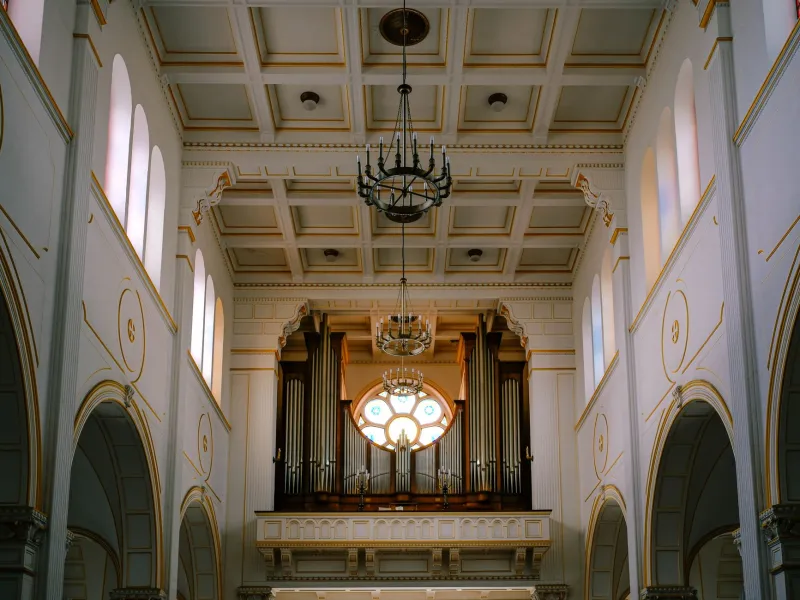
On a Tuesday afternoon in downtown Knoxville, Margaret Holloway is doing something most people her age have long since stopped doing: she's crawling. Specifically, she's crawling behind a row of wooden pipes inside a 1920s-era organ console at a historic Presbyterian church, flashlight in her teeth, trying to figure out why one of the low bass notes has started sounding like a foghorn with a head cold.
She's 67. She's been doing this for over forty years. And she has absolutely no plans to stop.
"People think the organ just sits there and plays itself," she says, emerging from behind the console with a smudge of dust on her cheek and a grin on her face. "It doesn't. It breathes. And if you don't pay attention to it, it'll let you know."
Across Tennessee, there are dozens of musicians like Margaret — organists, choir directors, and music ministers who are quietly, stubbornly, lovingly keeping the pipe organ tradition alive inside churches that range from grand Gothic revival cathedrals to small-town sanctuaries with peeling paint and leaky roofs. They don't make headlines. They rarely get standing ovations. But every Sunday, they show up.
A Sound That Built Communities
The pipe organ has been a fixture in American religious life for centuries, and Tennessee is no exception. From Memphis to Morristown, historic congregations built their identities around the music that poured out of these enormous, complex instruments. The organs themselves — some with thousands of individual pipes — were often the most expensive items a congregation ever purchased, sometimes taking decades to pay off.
That history matters to people like Reverend David Suggs of a century-old Baptist church in Jackson, Tennessee. "When you hear that organ, you're not just hearing music," he says. "You're hearing every congregation that sat in these pews before you. You're hearing funerals and weddings and Easter mornings. It's a living archive."
But that archive is under pressure. Shrinking congregations mean shrinking budgets. Digital keyboards have gotten remarkably good — and remarkably cheap. Younger worship styles often favor guitars, drums, and production setups that look more like a small concert than a traditional service. The result is that many churches have quietly retired their pipe organs, sometimes selling them off, sometimes letting them fall into silence.
For the people who've dedicated their lives to this instrument, that silence is devastating.
Teaching Forward
In Nashville, organist and music director James Okafor has been fighting that silence the only way he knows how: by teaching. For the past twelve years, he's run an informal organ program at his Episcopal church that has introduced over thirty students — most of them teenagers — to the instrument.
"The piano is familiar. The organ is mysterious," James says, leaning back in the bench after running a student through a Bach prelude. "Kids are drawn to things that feel like a secret. And the organ is absolutely a secret. Once they touch it, they don't want to stop."
His youngest current student is fourteen. His oldest is fifty-two, a dentist who decided mid-life that he wanted to learn something completely different. James doesn't charge for lessons. The church covers the cost. He calls it an investment in the instrument's survival.
"If no one learns to play it, it doesn't matter how well we restore it," he says. "It's just furniture."
This kind of grassroots education is happening in pockets all over the state. In Chattanooga, a consortium of churches recently partnered to share an organ teacher across three congregations — none of whom could afford one on their own. In Memphis, a retired music professor has been offering free workshops at a historic Black church whose 1940s-era organ is one of the oldest still-functioning instruments in Shelby County.
The Restoration Underground
Then there's the matter of keeping the instruments themselves alive. Pipe organs are not like pianos. They don't just need tuning. They need consistent climate control, regular mechanical maintenance, and periodic full restorations that can run into the hundreds of thousands of dollars. For cash-strapped congregations, that math is brutal.
Which is why people like Roy Tanner have become something close to folk heroes in certain circles. Roy runs a small organ restoration shop out of a converted barn near Cookeville, and for the past three decades he's been traveling to churches across Middle Tennessee to nurse aging instruments back to health — sometimes for far less than market rate.
"I've bartered for this work," he admits, laughing. "I've been paid in casseroles. I've been paid in firewood. I did one job where the church paid me partly in cash and partly in a used truck that I still drive."
Roy's work is painstaking. A full restoration can take months, requiring him to remove thousands of individual pipes, clean them, re-voice them — a process of adjusting each pipe's tone by hand — and then reassemble the entire instrument. He does most of it alone.
"These organs were built by craftsmen who are long gone," he says. "When I work on them, I feel like I'm in conversation with somebody I'll never meet. That's not nothing."
He's currently mid-restoration on a 1937 Möller organ at a small Methodist church in Putnam County. The congregation has about eighty regular members. They've been fundraising for three years to cover Roy's fees. He's been patient.
More Than Sunday Mornings
What gets lost in conversations about declining church attendance is how deeply these musical traditions extend beyond the congregation itself. Historic church organs have long served as community instruments — hosting recitals, school programs, and cultural events that draw people who may never attend a service.
Margaret Holloway's church in Knoxville hosts a free lunchtime concert series three times a year, drawing audiences that often outnumber the Sunday congregation. "We had a retired steelworker come up to me after a concert once," she recalls. "He said he hadn't been inside a church in thirty years, but he'd been coming to our concerts for five. He said the organ made him feel like the world wasn't completely falling apart."
That's the argument these musicians keep coming back to: this isn't just about religion. It's about something older and harder to name. The sound of a pipe organ in a stone room does something to people that's difficult to explain and almost impossible to replicate.
"I've seen people cry," says James Okafor. "People who don't believe in anything in particular. The sound gets into you whether you want it to or not."
The Next Note
Nobody in this world is naive about the challenges. Congregations are aging. Budgets are tight. The cultural winds are blowing in a different direction. There are probably fewer working church organists in Tennessee today than there were twenty years ago, and that number is likely to keep dropping.
But the people doing this work aren't interested in despair. They're interested in the next Sunday, the next student, the next pipe that needs coaxing back into tune.
Roy Tanner puts it simply: "Every time I get one of these instruments singing again, that's another few decades it'll be around. That's worth the work."
Margaret Holloway agrees. She closes the organ console after her Tuesday afternoon repair session, wipes her hands on her jeans, and sits down at the bench. She plays a single chord — low, full, resonant — and lets it fill the empty sanctuary.
"Still there," she says quietly. "Still there."