When the World Sleeps, They Create: Tennessee's Night Shift Artists Living Between Two Lives
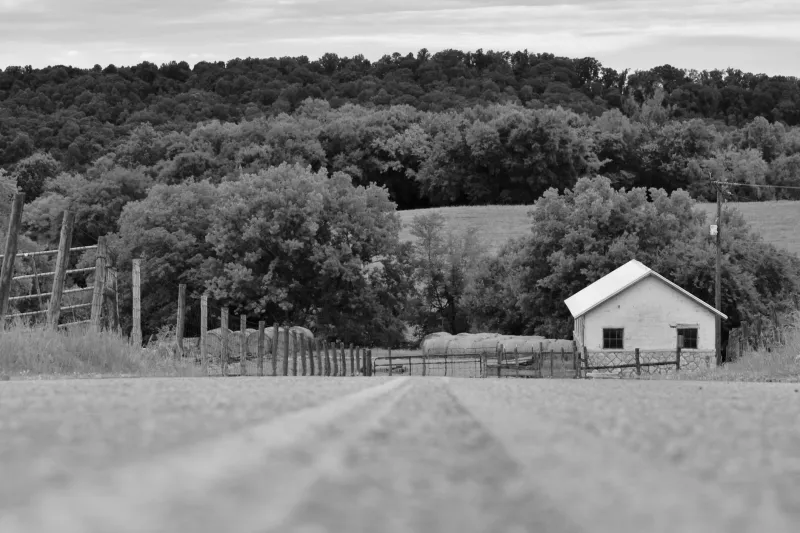
There's a particular kind of quiet that settles over Tennessee after midnight. The honky-tonks on Broadway wind down. The lights in the neighborhoods click off one by one. The interstate thins out to the occasional semi pushing through the dark. Most people don't know that quiet — not really. But ask a night shift worker, and they'll tell you it's one of the most alive things they've ever heard.
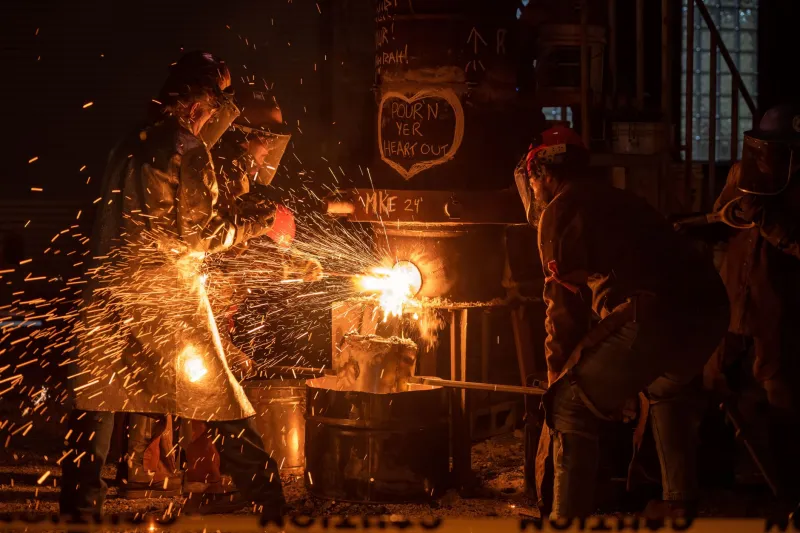
For a growing number of Tennesseans working graveyard shifts across hospitals, bakeries, factories, and loading docks, those overnight hours have become something unexpected: creative incubators. The exhaustion is real. The isolation can be brutal. But somewhere in that strange in-between time — too late for yesterday, too early for tomorrow — something opens up that the daylight rarely allows.
The Baker Who Paints Before the Bread Rises
Marcus Tillman has been baking since he was nineteen. These days, he runs the overnight production line at a wholesale bakery outside of Murfreesboro, clocking in at 10 p.m. and walking out just after 6 a.m. with flour in his hair and dough under his fingernails. What most of his coworkers don't know is that between batches — during those twenty-minute windows while the proofing racks do their thing — Marcus is sketching.
"I started keeping a notebook in my back pocket just to stay awake," he says, laughing. "Then the sketches got more serious. Now I've got forty notebooks stacked in my spare bedroom."
Over the past three years, Marcus has turned those bakery sketches into a full watercolor practice. His paintings — loose, warm studies of Middle Tennessee landscapes and working-class life — have shown at two Murfreesboro galleries and sold out both times. He paints in the morning, after the shift ends and before he sleeps, in a three-hour window he calls his "golden weird time."
"Everyone else is waking up and rushing around," he says. "I'm sitting at my kitchen table with coffee and a brush and total silence. It's the best three hours of my day."
Solitude as a Creative Tool
What Marcus describes isn't unusual among Tennessee's night shift creative community. The solitude that makes overnight work feel isolating for some becomes a kind of gift for others — uninterrupted time to think, make, and experiment without the social pressure of the regular nine-to-five world.
In Nashville, ICU nurse Danielle Okafor has been writing songs since her third overnight rotation at Vanderbilt University Medical Center. "You spend twelve hours watching people at their most vulnerable," she says quietly. "It changes what you write about. It changes everything you want to say."
Danielle's music — spare, gospel-influenced folk — lives on a SoundCloud page she updates sporadically but passionately. She records in her apartment on Sunday mornings after her weekend overnight shifts, voice still a little rough from the hours, guitar propped against her kitchen counter. She's never played a live show. She's not sure she wants to. "The music is mine," she says simply. "I made it in my own time. That feels sacred."
Factory Floors and Finished Songs
Not everyone keeps their creative work private. Darnell Crews, a quality control tech at a manufacturing plant in Dickson, has been releasing country-rap music under the name "Third Shift" since 2021 — and the name isn't accidental.
"Night shift gave me the whole thing," he says. "The aesthetic, the lyrics, the attitude. I work nights, I write about nights. Simple as that."
Darnell records on a modest home setup wedged into the corner of his living room, usually starting around 7 a.m. when his shift ends and his kids are still at school. His streaming numbers are modest but growing, and he recently opened for a regional act at a club in Clarksville. His songs deal directly with the texture of overnight work — fluorescent lights, the 3 a.m. vending machine run, the strange camaraderie of people who only know each other in the dark.
"People who work nights recognize it immediately," he says. "They hear those songs and go, 'Yeah, that's it. That's exactly it.' That means more to me than any playlist placement."
The Security Guard Writing a Novel Nobody Knows About
Over in Knoxville, James Whitfield has been guarding an office complex on the overnight shift for six years. He's read somewhere in the neighborhood of two hundred books during those quiet hours, and for the last two of them, he's been writing one.
"I always thought writing a novel was for people with degrees and time," James admits. "Then I realized — I have nothing but time between 2 and 5 a.m. Nobody comes in. Nothing happens. It's just me and the lobby and whatever I'm working on."
His novel — a Southern Gothic story set in fictional Appalachian Tennessee — is currently sitting at just over sixty thousand words on a battered laptop he keeps in his locker. He hasn't told his family yet. He's not sure why. "Maybe because once I tell people, it becomes a thing they're waiting on," he says. "Right now it's just mine. Just something happening in the middle of the night that nobody knows about."
There's something quietly radical about that sentiment. In a culture obsessed with hustle visibility and personal branding, James — and Marcus, and Danielle, and Darnell — are doing the opposite. They're creating for themselves first, in hours the world has essentially handed back to them.
What Night Teaches That Day Can't
Talk to enough overnight workers and a theme emerges: the night shift strips away performance. There's no audience for the 3 a.m. version of yourself. Nobody's watching. Nobody's impressed or unimpressed. You're just a person with a notebook or a guitar or a laptop, alone with whatever you actually want to make.
"Daytime is full of other people's expectations," Danielle puts it plainly. "Nighttime is just yours."
For Tennessee — a state that's always had a complicated, beautiful relationship between hard work and artistic expression — that idea feels deeply familiar. The people who built this state's musical and cultural identity weren't doing it on vacation time. They were doing it in the margins, between shifts, after the kids were asleep, before the sun came up. In a lot of ways, the overnight artists of today are just the latest version of a very old Tennessee tradition.
Marcus Tillman said it best, scraping dried paint off his wrist as morning light came through his kitchen window: "I'm not waiting for somebody to give me permission to be an artist. I've got three hours and a cup of coffee. That's enough."
For a lot of Tennesseans punching out just as the rest of the world punches in, it turns out that's more than enough.