Threads of Home: The Makers Stitching Tennessee's Textile Tradition Back Together
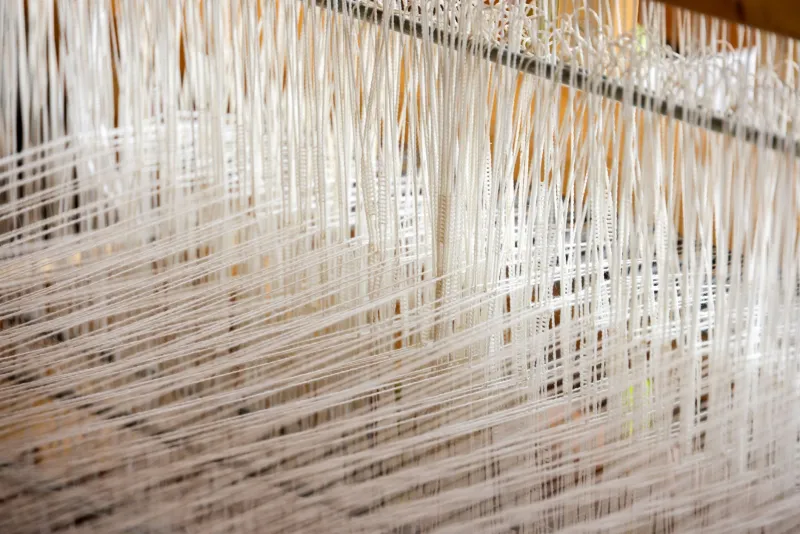
There's a particular sound to a working loom. It's rhythmic, almost hypnotic — a mechanical heartbeat that once defined entire communities across East Tennessee. For decades, that sound went quiet as factories shuttered and jobs migrated overseas. But walk into the right building in the right small town today, and you might just hear it again.
Tennessee's textile industry is waking up. Not in the way it existed in the mid-twentieth century — massive mills running three shifts and employing half a county — but in something arguably more interesting: a patchwork of small-batch producers, heritage-minded designers, and sustainability-focused entrepreneurs who are rewriting what it means to make cloth in the South.
Where It All Started
To understand the revival, you have to understand what was lost. From the late 1800s through most of the 1900s, the Upper Cumberland and Appalachian regions of Tennessee were home to dozens of textile operations. Towns like Elizabethton, Harriman, and Rockwood built entire economies around the mill. When NAFTA opened the floodgates of cheaper overseas production in the 1990s, the industry didn't just shrink — it nearly vanished. By the early 2000s, mill closures had gutted entire communities, leaving behind vacant buildings and a generation of skilled workers with nowhere to go.
What those closures also left behind, though, was institutional knowledge. The craft didn't disappear — it just went underground, passed down through families, preserved in community colleges, and quietly maintained by the kind of stubborn Tennesseans who don't let a good skill die.
The Mills Coming Back Online
In recent years, a handful of entrepreneurs have started breathing new life into those old buildings and those old skills. Some are reopening historic mill spaces with modern equipment and a direct-to-designer sales model. Others are starting smaller — think artisan weaving studios rather than full industrial operations — but with serious ambitions.
What's notable about this new wave of producers is how intentional they are about sourcing and process. Many are working with American-grown cotton and wool, including fiber from Tennessee and neighboring states, to create supply chains that are shorter, more transparent, and far more resilient than the global networks that replaced them. For designers and brands that care about where their materials come from, that's a genuinely compelling pitch.
Several of these operations have also leaned into heritage aesthetics — producing textiles that draw from traditional Appalachian patterns, natural dye techniques, and weave structures that have deep roots in the region. It's not nostalgia for its own sake. It's a design language that tells a story, and right now, that story sells.
Designers Finding Their Footing — Locally
On the other end of the supply chain, a growing number of Tennessee-based fashion and textile designers are making a point to source close to home. In Nashville, Knoxville, and Chattanooga, independent labels are building collections around domestically produced fabrics, and a few are going even further — partnering directly with in-state mills to develop exclusive materials.
For these designers, the appeal isn't just ethical. It's practical. Working with local producers means faster turnaround, easier quality control, and the ability to do smaller runs without the minimum order nightmares that come with overseas sourcing. It also means being able to look a customer in the eye and say, with full confidence, exactly where every yard of fabric came from.
The sustainable fashion movement has turbocharged this trend. Consumers — particularly younger ones — are increasingly skeptical of vague "eco-friendly" claims and hungry for actual transparency. A Tennessee-made garment using Tennessee-woven cloth from Tennessee-grown fiber? That's a provenance story that's hard to fake and even harder to beat.
Rural Communities Feeling the Ripple
Beyond the aesthetics and the ethics, there's a real economic story here. Textile manufacturing, even at a smaller artisan scale, creates jobs — and in rural parts of the state that have been economically hollowed out for a generation, those jobs matter enormously.
Some of the newer mill operations are making workforce development a core part of their model, partnering with local community colleges and technical schools to train the next generation of weavers, dyers, and textile technicians. It's an acknowledgment that the skills gap is real, and that rebuilding the industry means rebuilding the pipeline from scratch.
There's also a growing ecosystem of support around these businesses — fiber festivals, textile arts programs, and regional maker networks that connect producers with designers, educators, and enthusiasts. Events like the various craft and fiber festivals that dot the Tennessee calendar throughout the year have become important gathering points for this community, creating the kind of in-person connections that no amount of Instagram networking can replicate.
The Tension Between Tradition and Trend
It wouldn't be an honest conversation without acknowledging the challenges. Scaling artisan textile production is genuinely hard. Equipment is expensive. Skilled labor is scarce. Competing on price against overseas producers is essentially impossible, which means the entire business model depends on convincing customers to value origin, craft, and story over the lowest possible cost per yard.
There's also a real tension between preservation and evolution. Some purists worry that modernizing traditional techniques — adapting Appalachian patterns for contemporary fashion, or blending heritage aesthetics with trend-driven design — risks diluting the very cultural identity that makes these textiles meaningful. Others argue that adaptation is exactly how living traditions survive. Both perspectives have merit, and the most thoughtful producers are actively wrestling with that balance.
Something Worth Wearing
What's clear, spending time with the people at the center of this movement, is that this isn't a trend in the fleeting sense of the word. It's a reclamation. Tennessee has always been a place that makes things — furniture, food, music, whiskey. Adding fabric back to that list feels less like an innovation and more like a homecoming.
The looms are running again. The sound is a little different now — smaller, more deliberate, shaped by a different set of intentions than the industrial era that came before. But it's unmistakably the same heartbeat.
And if you know what you're listening for, it sounds a lot like something being built to last.