Small Stages, Big Dreams: The Tennessee Venues That Turn Unknown Artists Into Household Names
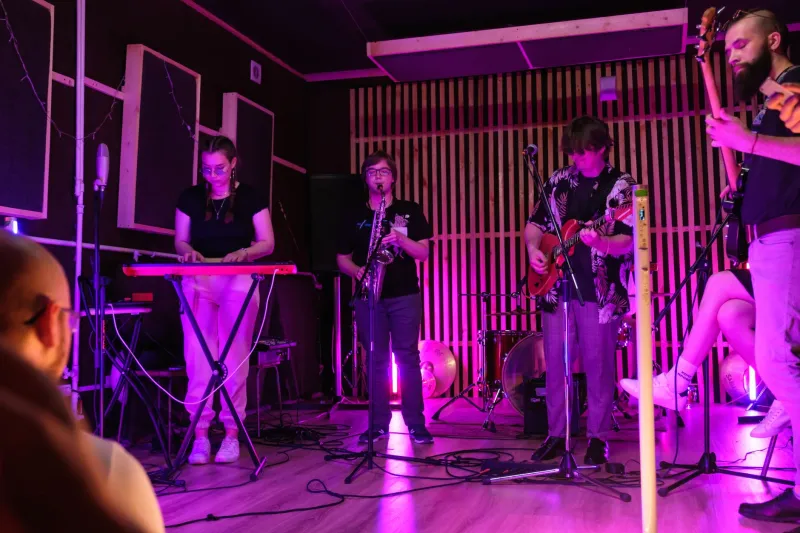
There's a particular kind of magic that happens in a room that holds maybe 80 people. The kind where the artist is close enough that you can see their hands shake on the first chord. Where the applause feels personal, almost like a conversation. Tennessee has always understood this magic — and it turns out, so does the music industry.
Long before the sold-out amphitheaters and the late-night TV appearances, a whole lot of the artists you love today were playing to half-full rooms in Murfreesboro, Johnson City, or a converted barn somewhere outside of Cookeville. That's not a footnote in their story. For most of them, it's the whole foundation.
The Listening Room Culture That Sets Tennessee Apart
You won't find listening rooms like this everywhere. In plenty of states, live music is background noise — something to talk over while you wait on your drinks. Tennessee flipped that script a long time ago, and the results show up in the caliber of artists who come out of here year after year.
Venues like The Listening Room Café in Nashville and The Down Home in Johnson City — one of the oldest continuously operating music venues in the country — built their reputations on a simple premise: the music comes first. No TVs blaring. No trivia nights drowning out the set. Just a performer, a microphone, and an audience that actually showed up to listen.
"When you play a real listening room, you learn really fast what's working and what isn't," says Callie Marsh, a singer-songwriter from Chattanooga who spent two years working the small venue circuit before landing a publishing deal in Nashville. "You can't hide behind production or lights or a big band. It's just you and the song, and the audience will tell you everything you need to know."
That feedback loop — immediate, honest, and sometimes brutal — is something that no amount of studio time can replicate. And venue owners across the state will tell you the same thing: the artists who come through their doors and take it seriously are the ones you hear about later.
Beyond Nashville: The Mid-State and Mountain Venues Doing Heavy Lifting
It's easy to assume all roads lead to Nashville, and eventually, a lot of them do. But the trail usually starts somewhere else entirely.
In Knoxville, venues like the Bijou Theatre and Market Square's outdoor stage have long served as a bridge between raw talent and real audiences. Knoxville has a particular energy for live music — partly because of the University of Tennessee crowd, partly because the city has always had a scrappy, independent streak when it comes to the arts.
Further east, the mountains tell their own story. The Carter Family Fold in Hiltons, Virginia — just a short drive from the Tennessee border and deeply woven into the regional music tradition — has been hosting old-time and bluegrass performers since 1976. For artists rooted in Appalachian sounds, playing the Fold carries a weight that's hard to put into words. It's a lineage thing. You're standing where the music came from.
Down in Chattanooga, the Songbirds Guitar Museum doesn't just house vintage instruments — it hosts intimate performances that draw serious music lovers from across the Southeast. Venue director Paul Hensley says the goal has always been to create a space where emerging artists feel the gravity of what they're doing. "When you're surrounded by guitars that belonged to legends, it changes how you play," he says. "You rise to the room."
The Economics of the Small Venue (And Why They Keep Fighting)
Here's the part nobody really talks about: running a small music venue in Tennessee is a labor of love that doesn't always pay the bills. Margins are thin. Booking emerging artists means taking chances on draws that might not fill the room. And the competition for attention — from streaming, from bigger venues, from just about everything — is relentless.
So why do they keep doing it?
"Because somebody did it for us," says Tommy Griggs, who has run a 120-seat listening room in Murfreesboro for the better part of a decade. "Every artist I've ever booked, somebody gave them their first shot. I want to be that place for the next wave."
That ethos — pay it forward, keep the pipeline open — runs deep in Tennessee's music community. And it's not entirely altruistic, either. Venue owners who develop a reputation for discovering talent attract the kind of audiences who want to be first. Who want the story. Who want to say they saw somebody before the world caught on.
There's also a growing recognition among music industry professionals that these rooms matter in a very practical sense. A&R scouts, publishers, and managers regularly make the rounds at small Tennessee venues specifically because the talent density is so high. Nashville might be where deals get signed, but the discovery often happens somewhere much smaller.
What the Artists Say
Ask almost any working musician from Tennessee about their early days, and you'll get a version of the same story. Long drives for short sets. Gear loaded in and out of spaces that weren't built for it. Crowds that ranged from enthusiastic to indifferent. And somewhere in the middle of all that grind, a night that changed something.
"I played a show at this little outdoor venue in Cookeville — maybe 60 people there — and something just clicked," recalls Marcus Webb, a folk-Americana artist who's since toured nationally. "I figured out how to hold a room that night. You can't learn that anywhere else."
That's the through-line in all of these stories. The small venues aren't just stops on the way to something bigger. They're where the real education happens. Where artists figure out who they are on stage, what their voice actually sounds like to other people, and whether they have what it takes to keep going when nobody's watching.
Tennessee's Stages Are Still the Starting Line
The music industry changes constantly — formats shift, platforms rise and fall, and the way people discover artists looks completely different than it did ten years ago. But something stubbornly consistent remains at the center of it all: a person, a stage, and an audience deciding whether to believe.
Tennessee's grassroots venues have been facilitating that moment for generations. From the fold-up chair shows in church fellowship halls to the outdoor stages strung with Edison bulbs, these spaces are doing work that no algorithm can replicate. They're building artists from the ground up, one honest set at a time.
And if history is any guide, the next artist you can't stop listening to probably played a room like that not too long ago.