After the Bell Rings: Tennessee Teachers Who Are Turning Forgotten Spaces Into Art Communities
Most people picture an art gallery a certain way — white walls, track lighting, a glass of wine in a plastic cup, and prices that make you quietly back toward the exit. But tucked inside a shuttered hardware store in a small Tennessee river town, or down the stairs of a century-old church basement in a mid-sized city that doesn't make anyone's travel list, something different is happening.
Teachers are taking over.
Not in any dramatic, headline-grabbing way. More like the slow, determined way that kudzu takes a fence line — quietly, persistently, until one day you look up and realize the whole landscape has changed. Across Tennessee, educators who spend their days shaping young minds are spending their evenings and weekends reclaiming creative lives they never fully abandoned. And the spaces they're choosing to do it in say a lot about what they value.
The Spaces Nobody Wanted
It usually starts with a building nobody knows what to do with anymore.
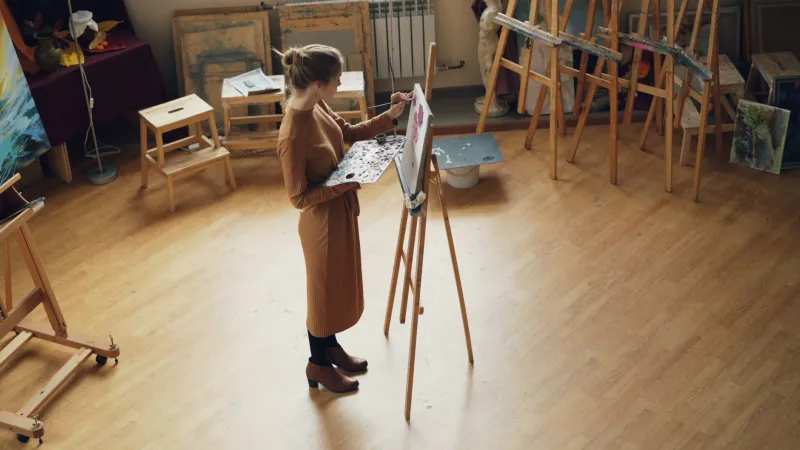
In Humboldt, a former photography studio sat empty for three years before a middle school art teacher named Denise began renting it for a hundred dollars a month. She called it a studio but it functioned more like a community experiment — she'd leave the lights on late, prop the door open, and neighbors would wander in. Some of them started making things too.
"I wasn't trying to open a gallery," she says. "I just needed somewhere to paint that wasn't my kitchen table."
That accidental openness is a recurring theme. In Cookeville, a high school English teacher converted a church fellowship hall into a rotating pop-up space where local writers, visual artists, and musicians share work on the second Saturday of every month. In Jackson, a cluster of teachers from three different schools split the cost of a former insurance office and built out a shared studio with mismatched furniture, donated easels, and a coffee maker that runs almost constantly.
These aren't polished operations. That's kind of the point.
Why Not the Established Art Scene?
Tennessee has legitimate arts infrastructure — Nashville's gallery district, Knoxville's Market Square, the thriving creative economies in Memphis. So why are these educators deliberately sidestepping those systems?
The answers are practical, personal, and sometimes a little political.
For starters, traditional gallery representation is competitive and often geographically concentrated. An art teacher in Dyersburg or Tullahoma isn't hopping in the car every weekend to haul work to a Nashville gallery — and even if they did, breaking into that world takes connections, a certain kind of portfolio, and time that most working educators simply don't have.
But there's something else underneath the logistics. Several of the educators behind these spaces describe a genuine discomfort with the gatekeeping built into formal art institutions — the sense that certain work, certain aesthetics, certain people get welcomed in while others don't. Building their own spaces means building their own rules.
"I didn't want to spend energy trying to fit into someone else's idea of what art should look like," says Marcus, a visual arts teacher in Morristown who co-runs a pop-up collective out of a renovated carport. "I wanted to make the thing I wanted to make and share it with people who actually live here."
The Double Life Is Real — and Exhausting
Let's not romanticize this too much. Teaching is not a light job. Grading, planning, parent communication, IEP meetings, professional development — the list doesn't stop when the final bell rings. The teachers building these art communities are doing it on top of all of that, often fueled by a stubbornness that borders on compulsion.
"There are nights I ask myself why I'm doing this," admits Carla, a third-grade teacher in Cleveland who runs a bimonthly art show out of a converted laundromat space. "And then someone walks in who's never been to an art show in their life and they just stand there looking at something on the wall, and I remember."
That moment — a first encounter with original art in a familiar, non-intimidating space — comes up again and again in these conversations. These educators know from their day jobs that environment shapes experience. A laundromat gallery feels different from a white-cube gallery. A church basement feels different from a museum. That difference matters when you're trying to reach people who've been made to feel like art isn't for them.
Building Community, Not Just Showing Work
What separates these educator-run spaces from a simple hobby pursuit is the intentional community-building happening around them. Most of these collectives aren't just showcasing work — they're actively recruiting other makers, hosting workshops, mentoring young artists, and in several cases, providing a first real creative outlet for people in their communities who didn't know they needed one.
In Clarksville, a group of four teachers runs a quarterly open studio night that's become a genuine local event, drawing upwards of 80 people to a space that used to be a defunct diner. They charge nothing for admission and ask artists to donate 10 percent of any sales to a fund that buys art supplies for underfunded classrooms.
That loop — educators making art to sustain the conditions that let other people make art — is quietly radical.
"We teach kids that creativity matters," says one of the Clarksville organizers, a high school ceramics teacher named Yolanda. "We have to actually live that. Otherwise what are we really telling them?"
What Tennessee Loses If This Doesn't Keep Going
There's a version of this story where the momentum fades — where the lease runs out, the landlord sells, the organizing group burns out, and the space goes back to sitting empty. That version isn't hypothetical. Several of the educators interviewed for this piece have already watched one or two previous attempts collapse under the weight of real life.
But the persistence of this movement, even in the face of those setbacks, suggests something genuine is being answered here. Tennessee's smaller cities are full of creative people who don't fit neatly into the Nashville pipeline or the established arts scenes in the state's larger metros. They need places to work, places to show, and communities that reflect their actual lives.
The teachers building those places after dark, in the spaces nobody else wanted, are doing something that looks a lot like what they do all day — finding potential where others see nothing, and making something from it.
That's not a bad description of what art is, either.