The Quiet Keepers: How Tennessee's Small-Town Librarians Became the Heart of Main Street
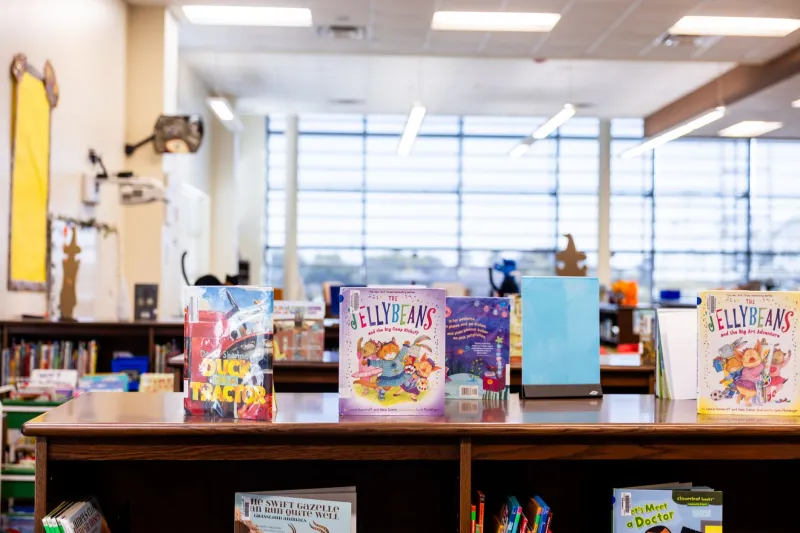
Walk into the Grundy County Library on a Tuesday afternoon and you might catch something unexpected: a retired coal miner sitting across from a teenager, both of them leaning over a recording setup, preserving stories that would otherwise disappear. Down the hall, a woman is learning to use a laser cutter for the first time. In the corner, three kids are building something out of cardboard and hot glue that they insist will change everything.
This isn't what most people picture when they think "public library." But in small towns across Tennessee, this is exactly what's happening — and it's happening because a handful of determined librarians decided their buildings were too important to sit quietly on the shelf.
More Than a Card Catalog
For decades, the narrative around public libraries has been a little gloomy. Budgets shrink, foot traffic drops, and every few years somebody asks out loud whether libraries are still necessary in a world where information lives in everyone's pocket. Tennessee's small-town librarians have a pretty firm answer to that question, and it doesn't involve a single Google search.
"People kept saying everything's online now, so why do you need us?" says one librarian from a rural county in West Tennessee who's been reshaping her branch for the past six years. "And I thought — okay, but where do you go when you need to be somewhere? Where do you go when you need a person, not a screen?"
That question has driven a wave of reinvention across the state. Libraries in places like Savannah, Rogersville, and Pikeville have quietly evolved into something much harder to define than a book repository. They're part community center, part archive, part workshop, part gathering place — and entirely essential to the towns that surround them.
Saving What Would Otherwise Be Lost
One of the most quietly powerful things happening inside Tennessee's small-town libraries right now is the work of preservation. Local history collections that used to sit in dusty boxes are being digitized, indexed, and made accessible. Oral history projects are capturing the voices of elders before those stories are gone forever.
In one East Tennessee county, a librarian launched a community memory project after noticing that longtime residents were passing away and taking irreplaceable knowledge with them — names of creeks, histories of old homesteads, accounts of floods and fires and hard winters that never made it into any official record. She trained volunteers, secured a small grant, and started recording. Hundreds of hours of interviews later, the archive has become one of the most-visited resources in the building.
"There's stuff in those recordings you won't find anywhere else on earth," she says. "That's not hyperbole. That's just the truth."
This kind of work doesn't make headlines the way a new park or a downtown restaurant might. But for the communities involved, it's the difference between a living history and a forgotten one.
Making Space for Making Things
If the archival work represents libraries looking backward, the maker spaces represent something else entirely: a bet on the future. Across Tennessee, librarians have been carving out corners of their buildings for 3D printers, sewing machines, recording equipment, woodworking tools, and digital design stations — and then throwing the doors open to anyone with a library card.
The results have been genuinely surprising. Small-business owners have used library equipment to prototype products before they could afford their own tools. Teenagers have recorded music and produced short films. Retirees have learned skills they never imagined picking up. In more than a few cases, what started as a library project turned into an actual business.
"We had a woman come in who wanted to start making candles to sell," recalls a Middle Tennessee librarian who helped build out her branch's maker space on a shoestring budget. "She used our equipment, took some of our small-business workshops, and now she's got a real operation going. We didn't give her the idea — she had that. We just gave her a place to figure it out."
For rural communities where access to tools, training, and mentorship can be genuinely hard to come by, that kind of practical support matters more than most outsiders realize.
The Gathering Place Nobody Talks About
Beyond the archives and the maker spaces, there's something even simpler at the core of what Tennessee's small-town librarians are doing: they're keeping a door open.
In towns where the diner closed years ago and the community center sits locked most of the week, the library has become the place where people actually run into each other. Story times that draw young parents. Job-skills workshops that bring in folks who haven't been inside the building since grade school. Evening events — author talks, local music, history nights — that give people a reason to come downtown after dark.
"We're not competing with anything," says a librarian from a small town in the Cumberland Plateau region. "We're just filling space that nobody else is filling. And people are hungry for it. They want somewhere to go that feels like it belongs to them."
That sense of ownership is something the best small-town librarians talk about a lot. The goal isn't to program people into the building — it's to hand the building back to the community and let them decide what it becomes. The librarian's job, in this model, is less about managing a collection and more about listening, connecting, and getting out of the way when the community finds its own momentum.
Why It Matters Now
There's a bigger story underneath all of this. Tennessee's small towns are fighting for relevance in an economy that keeps pulling people and resources toward larger cities. Main streets that were once full of activity have hollowed out in many places, and the civic fabric that holds communities together — the institutions, the gathering spots, the shared sense of place — is genuinely fragile.
Libraries, almost by accident, are positioned to be one of the most important tools in reversing that drift. They already exist. They're already trusted. They're already free and open to everyone. And increasingly, they're staffed by people who see their job not just as managing books but as actively building community.
That's a different kind of librarian than the stereotype suggests — and Tennessee has more than a few of them. They're not waiting for a grant or a mandate or someone else to figure it out. They're moving furniture, writing proposals, learning new software, and showing up early. They're doing the unglamorous, essential work of keeping small towns alive.
And most days, they're doing it with a library card and a whole lot of conviction.