Never Too Late to Sing: The Tennesseans Who Found Their Voices When Life Took a Turn
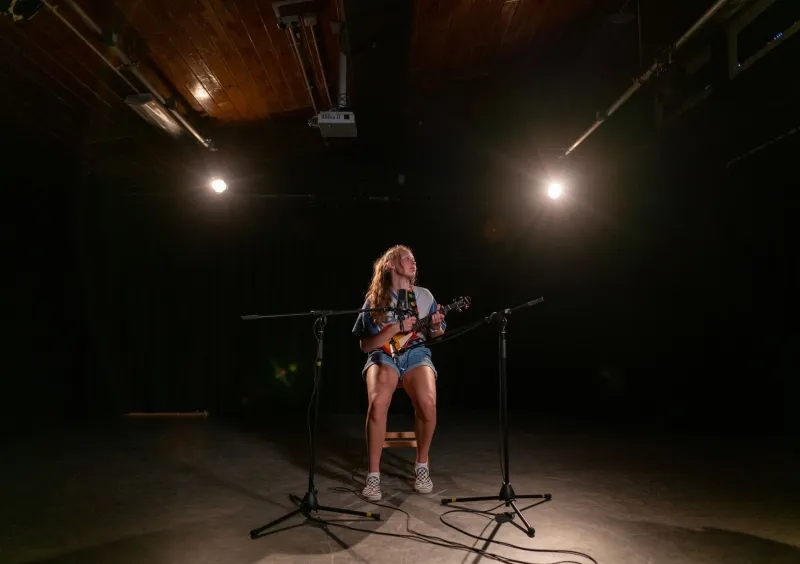
Carol Estes was fifty-three years old the first time she sang in front of an audience. It was a Wednesday night at a small church in Clarksville, Tennessee, and she almost didn't go through with it.
"My hands were shaking so bad I had to hold the microphone with both of them," she says. "But then something happened. I got about eight bars in and I just... let go. I don't know how else to describe it."
What came out of Carol that night surprised everyone in the room, including Carol. A rich, full-bodied alto that her choir director later described as "the kind of voice you wait years to find." She'd spent three decades as a dental hygienist, raised two sons mostly on her own, and had never once considered that singing might be part of her story.
Until it was.
The Ones Life Detoured
Tennessee has always had a complicated relationship with the idea of the "overnight success." The state that built an entire city around the music industry also has a long tradition of people who sang not for stages or contracts but for church pews, kitchen tables, and front porches. That tradition, it turns out, has a way of catching up with people.
Marco Delgado spent most of his forties running a landscaping company in Murfreesboro. He sang along to the radio, sure—who doesn't—but performing wasn't on his radar. Then, at forty-seven, his business partner died suddenly, and Marco found himself at a grief counseling group that met at a community center on Thursday evenings. The group's facilitator happened to also lead a community choir. She invited Marco to try it.
"I thought it was going to be terrible," he says. "I thought I'd hate it. But I walked in there the first Thursday and I just felt like I was supposed to be there. It sounds cheesy, but that's what it was."
Two years later, Marco is a section leader in that choir and has started writing original songs on weekends. He's not trying to get signed. He's just trying to keep going.
"Music gave me somewhere to put things," he says. "When you lose someone, you need somewhere to put things."
From Karaoke Joke to Actual Gigs
Not every late-blooming voice has a heavy origin story. Sometimes it starts with a dare and a bad sound system at a bar in Cookeville.
That's roughly how Tammy Overbeck's singing life began. She was forty-one, out with coworkers, and her friend put her name in for karaoke as a prank. Tammy sang Patsy Cline's "Crazy." The room went quiet in the way rooms go quiet when something genuinely good is happening.
"People started recording on their phones," she remembers. "I didn't know until afterward. One of my coworkers posted it and I woke up the next morning with like four thousand views. I didn't even have a public profile."
That video eventually landed Tammy a spot at a local songwriter showcase, then a recurring gig at a wine bar in downtown Cookeville, then a self-produced EP recorded at a home studio in her basement. She still works full-time as an office manager. She also still performs, roughly twice a month, to rooms full of people who had no idea she existed two years ago.
"I'm not quitting my day job," she says with a laugh. "But I'm also not pretending this isn't a real part of my life now. It is."
What Tennessee's Music Culture Gets Right
There's something about the way music functions in Tennessee that makes space for these kinds of stories. It's a place where the line between performer and audience has always been a little blurry—where the person sitting in the pew might have a better voice than the one standing at the pulpit, where a hardware store owner might also play lead guitar on Friday nights, where music is less a career path than a common language.
"Tennessee doesn't ask for your resume before it lets you sing," says Marcus Webb, who runs a community music program in Memphis that works with adult learners. "That's actually kind of rare. A lot of places, if you didn't start young, people look at you sideways. Here, there's more of a sense that music belongs to everybody."
Webb has seen dozens of adults find their voices through his program—retirees, veterans, people in recovery, parents whose kids finally left home and left them wondering what came next. He's stopped being surprised by the quality of what emerges.
"Honestly, some of the most compelling singers I've worked with came to it late," he says. "There's something that life experience does to a voice. It puts something in there that you can't fake and you can't teach."
The Part Nobody Plans For
Back in Clarksville, Carol Estes is preparing for her first solo performance outside of church—a small community concert at a local arts center. She's been rehearsing for six weeks. She's still nervous.
She doesn't have a manager or a social media strategy or a five-year plan. What she has is a voice she didn't know was there, a song she's been working up the courage to sing, and a room full of neighbors who showed up because someone told them they had to hear this woman.
That's about as Tennessean as it gets.
"I used to think I missed my window," Carol says. "Now I think maybe the window just needed me to be ready first."