Before the Recipe Dies: The Tennessee Women Racing to Save Their Family's Food Memory
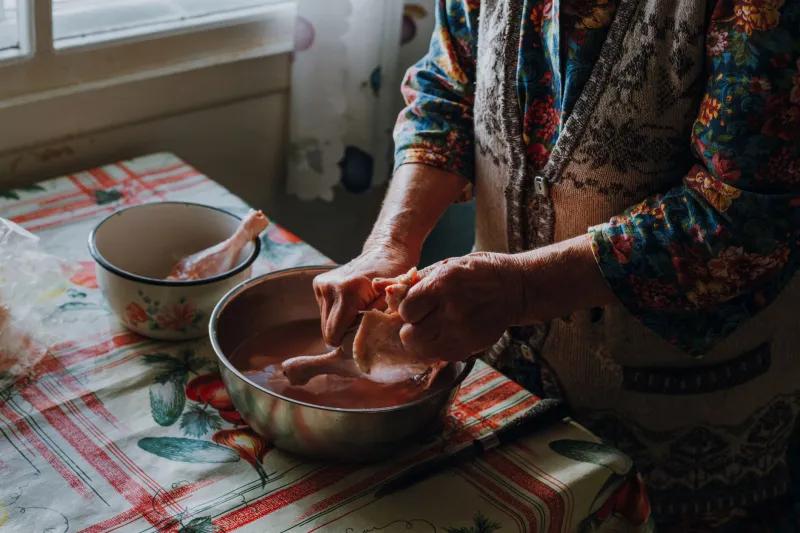
The recipe was never written down. It existed in the hands of one woman, learned by watching rather than reading, passed through decades of Sunday afternoons and church potlucks and holiday kitchens. And then, one day, the woman was gone, and the recipe was gone with her.
This is the story that keeps a certain group of Tennessee women up at night — and it's the reason they've started doing something about it.
Across the state, from small Appalachian communities in the east to the flatlands of West Tennessee, older women are systematically documenting family and regional recipes before the knowledge walks out the door forever. They're recording videos, conducting oral histories, filling archival notebooks, and building digital collections that their grandchildren and great-grandchildren will one day be deeply grateful for. This isn't scrapbooking. It's rescue work.
The Urgency Underneath the Apron
Spend any time talking to the women doing this work and one thing becomes clear immediately: they don't see it as a hobby. They see it as a race.
"Every time someone in my mother's generation passes, we lose something that cannot be Googled," says a retired schoolteacher from Sevier County who has spent the last four years filming her elderly neighbors cooking dishes that have no written record anywhere. "I'm not exaggerating when I say some of these recipes exist in one person's hands. One person. When she's gone, that's it."
The dishes she's documenting aren't always the ones that show up in Tennessee tourism brochures. Yes, there are biscuit recipes and cornbread variations and slow-cooked beans. But there are also pickled preparations that reflect specific immigrant communities that settled in particular Tennessee valleys. There are spice combinations that trace back to West African culinary traditions carried through generations of Black Southern families. There are Depression-era techniques for making something out of almost nothing that have real practical value even now.
The diversity of what's at risk is part of what makes the preservation work so consequential.
More Than Ingredients
Anyone who's cooked from a handwritten family recipe knows that the written version is only part of the story. The other part lives in the margin notes, the crossed-out measurements, the casual asides that explain everything: use the big cast iron, not the little one or Mama always added a little more sugar than this says.
Oral history captures something that a recipe card simply cannot. When an 80-year-old woman in Hardin County explains how she learned to make her mother's stack cake, she's not just transmitting a list of ingredients. She's transmitting context — the occasion the cake was made for, the way the kitchen smelled, the argument about whether to use dried apple or fresh, the year the recipe changed because a particular ingredient became hard to find.
"Food is memory," says a woman from Weakley County who has been recording her own mother, her aunts, and several women from her church congregation over the past three years. "You can't separate the two. When I film my Aunt Loretta making her chess pie, I'm not just getting the pie. I'm getting sixty years of her life."
Her archive now includes more than forty hours of footage, organized by dish, by family line, and by county of origin. She's working with a local library to figure out how to make it accessible to the broader community without compromising the privacy of the families involved.
The Technology Learning Curve
One of the more charming aspects of this movement is that many of the women leading it came to technology relatively late — and figured it out anyway because the work demanded it.
Smartphones, basic video editing software, cloud storage, and simple archiving tools have become standard equipment for women who, in some cases, didn't own a computer until their sixties. The learning curve was real, and most of them will tell you about it with a laugh.
"My grandson had to show me how to hold the phone sideways so the video wasn't all tall and skinny," admits a Nashville-area woman who has been documenting her East Tennessee family's food traditions since her mother was diagnosed with dementia four years ago. The diagnosis was, in her words, "the alarm going off." She's now recorded more than sixty recipes, including several she had to reconstruct through family interviews because her mother could no longer articulate the steps herself.
That reconstruction process — piecing together a recipe from the memories of multiple family members who each remember it slightly differently — is its own form of detective work, and it produces its own kind of archive: not a single authoritative recipe but a living document that acknowledges variation and memory and the way food changes across generations.
Connecting to Something Larger
Some of these women have found that their individual projects connect to larger institutional efforts. University food studies programs, state historical societies, and organizations focused on Southern foodways have begun recognizing the value of what these informal archivists are producing.
The Southern Foodways Alliance, based in Oxford, Mississippi, has long championed oral history as a legitimate and vital form of food documentation. Their model has inspired several Tennessee women who discovered the organization's work and realized they were already doing something similar on a family scale.
"I didn't know what I was doing had a name," says the Sevier County schoolteacher. "I just knew it needed to be done."
That grassroots quality — the sense of urgency preceding any formal framework — is part of what makes this movement distinctive. These women aren't waiting for a grant or an institution to validate their work. They're doing it because the alternative is loss.
What Gets Saved, What Gets Lost
Even the most dedicated archivists are honest about the limits of what documentation can preserve. A video of someone making cornbread can capture the technique, the proportion, the look of the batter when it's right. What it can't fully capture is the feel of the dough under experienced hands, or the specific cast iron skillet that's been seasoned over fifty years, or the particular quality of the woodstove heat that the electric oven will never quite replicate.
Some things, inevitably, are lost. The women doing this work know that, and they carry it.
But they also know that what they're saving is irreplaceable — not just for their own families, but for a broader understanding of who Tennesseans are, where they came from, and what they carried with them. Food is history. And right now, in kitchens across this state, some of the most important historians around are making sure it gets written down.