Dust to Community: The Tennessee Neighbors Breathing Life Into Buildings Everyone Else Gave Up On
The building on South Jefferson Street in Pulaski sat empty for eleven years. Before that it was a hardware store. Before that, a dry goods shop. For more than a decade it was just a wound in the block — broken windows patched with plywood, a FOR SALE sign so weathered it had become part of the architecture.
Today, it's a community kitchen, a weekend market, and a rotating gallery space run by a group of neighbors who put in the work themselves, raised the money themselves, and made every decision themselves.
No developer. No corporate anchor tenant. No outside money at all, really — just a crowdfunding campaign, a lot of sweat, and a shared refusal to accept that the building was someone else's problem.
"People kept waiting for somebody to come fix it," says Janelle Brooks, one of the core organizers behind the project. "We finally figured out we were the somebody."
Empty Buildings, Full Potential
Across Tennessee, the story repeats itself in different forms. A shuttered textile mill in Fayette County. An abandoned YMCA in a mid-sized city that lost its anchor employer. A row of dead storefronts in a rural county seat that never quite recovered from the interstate bypassing the old highway.
For years, the conventional wisdom was that these spaces needed outside investment to come back — a developer with deep pockets, a chain retailer willing to anchor a renovation, a government grant large enough to make the math work. Sometimes that outside investment comes. Often it doesn't. And while communities wait, buildings decay, neighborhoods lose confidence, and the gap between what a place is and what it could be grows wider.
But a different playbook is getting written in pockets of Tennessee, and it doesn't start with a business plan. It starts with people getting angry enough — or inspired enough — to do something.
How It Actually Gets Done
The mechanics of grassroots building reclamation are unglamorous. They involve zoning board meetings and building code consultations and arguments about liability insurance. They involve learning what a load-bearing wall is the hard way. They involve fundraising campaigns that stall out at $4,000 when you need $40,000, and then somehow, slowly, find their footing.
In Dayton, Tennessee — a town most people outside the state know only because of the Scopes Trial — a group called the Rhea County Commons Project has been working for three years to convert a former feed-and-seed warehouse into a mixed-use community space. The building is structurally sound. The vision is clear. The money comes in pieces.
"We did a crowdfunding campaign, we did a community fundraiser dinner series, we applied for every small grant we could find," says organizer Pete Whitfield. "Each time we hit a milestone, people got more confident. The community started to believe it could actually happen."
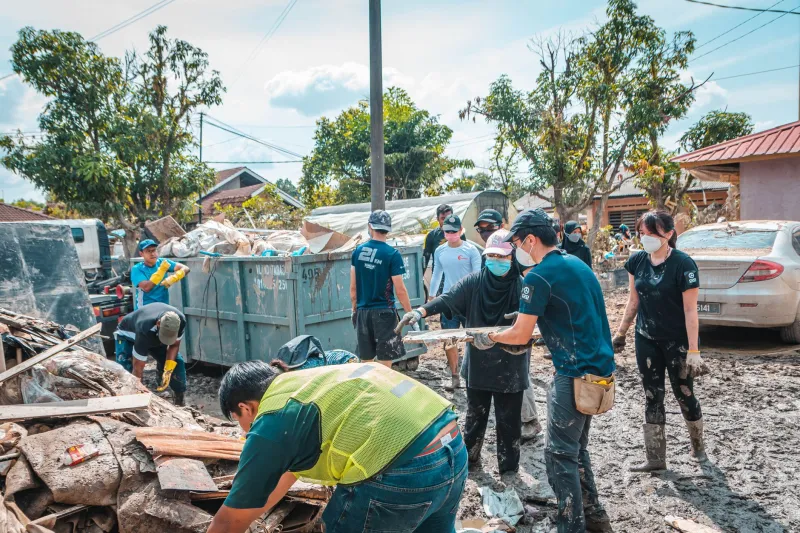
That belief is, itself, a resource. When neighbors feel ownership over a project, they show up — literally. Weekend work parties have drawn as many as forty volunteers to sand floors, paint walls, rewire lighting, and haul decades of accumulated debris. Local contractors have donated hours. A retired electrician worked three full days for free because he grew up in the building when it was his family's business.
The Ripple Gets Wider
What happens to property values and neighborhood identity when a blighted building gets reclaimed isn't always easy to quantify, but the people living near these projects tend to feel it immediately.
In Pulaski, the block around Janelle's community kitchen has seen two other vacant storefronts lease out in the eighteen months since the project opened. A coffee shop opened across the street. A local artist rented a studio space next door. Whether those changes are directly attributable to the anchor project or just coincidentally timed is impossible to say with certainty — but Janelle doesn't think it's a coincidence.
"A dead block tells everybody it's okay to give up," she says. "A living building tells everybody something different."
In Memphis, a collective called Restore South has been working in the Whitehaven neighborhood, converting a former commercial laundry facility into a flexible event and workshop space. The process has been slower than anyone hoped, but the building has become a gathering point even mid-renovation — community meetings, pop-up markets, and informal events that draw foot traffic and generate conversation about what the neighborhood can be.
"We didn't wait until it was finished to start using it," says collective member Shaundra Wells. "The building is the project. People coming into it while it's still being built is part of the story."
The Challenges Are Real
None of this is easy, and it would be dishonest to suggest otherwise. Grassroots building reclamation runs headlong into systems designed for larger, better-capitalized actors. Zoning codes assume professional developers. Insurance requirements assume institutional backing. Code compliance timelines assume someone with a construction crew on payroll.
Organizers across these projects describe a recurring frustration: the rules weren't written for them. Getting a variance, navigating a historic preservation review, or finding an insurance policy that covers a community-run space can eat months of time and energy that small volunteer teams simply don't have in abundance.
Funding gaps are persistent. Crowdfunding works up to a point, but large structural repairs — roofs, foundations, HVAC systems — often require more capital than a community campaign can realistically generate. Several projects in Tennessee have stalled at exactly these moments, waiting for a grant to come through or a donor to step forward.
And yet, the projects keep moving. Slowly, imperfectly, stubbornly.
What They're Actually Building
Ask the people doing this work what they're really building, and the answers go beyond square footage. They talk about proving something — to their communities, to themselves, to the next generation of Tennesseans watching to see whether ordinary people can actually change things without waiting for permission.
"Every town in Tennessee has a building like ours," Janelle says, standing in the middle of her community kitchen on a Saturday morning while vendors set up around her. "Every town has people who want to do something about it. They just need to know it's possible."
The dust is still settling in some of these spaces. The paint is still fresh. The folding tables are a little wobbly. But the lights are on, the doors are open, and the neighbors are inside — and in Tennessee, that's usually how something real gets started.