Leaving Music Row Behind: The Tennessee Artists Who Found Their Sound by Getting Lost in Smaller Towns
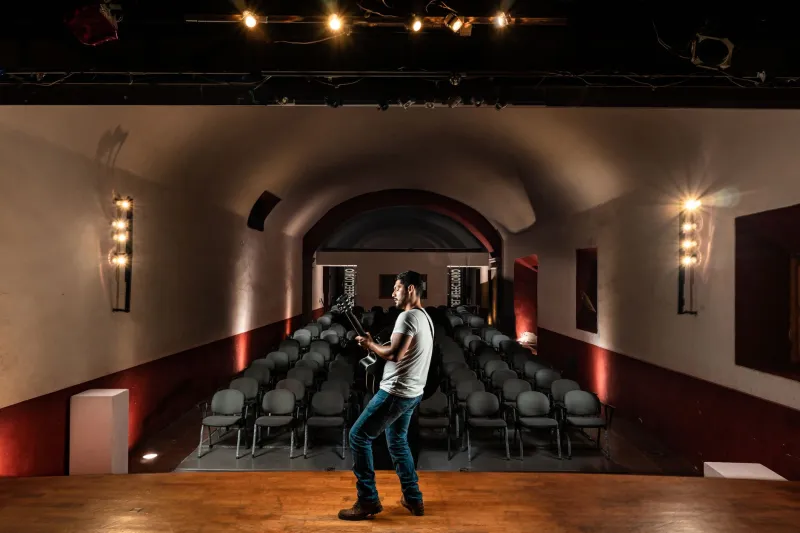
There's a version of the Nashville dream that everybody knows. You move to Music City in your twenties with a truck bed full of gear and a notebook full of songs. You play every writers' round, shake every hand, and wait for the machinery to notice you. For a lot of gifted people, that wait stretches into years — and somewhere along the way, the music itself starts to feel like a job application rather than a reason to get out of bed.
A quietly growing number of Tennessee musicians have decided to stop waiting and start somewhere else entirely. Not somewhere else as in Los Angeles or Austin. Somewhere else as in Cookeville. Jonesborough. Murfreesboro. Tullahoma. Towns where the pressure of a publishing deal isn't hovering over every chord change, and where the person in the front row at your show is your neighbor.
What they found on the other side surprised even them.
The Weight of the Row
Anybody who's spent serious time in Nashville's music industry will tell you the same thing: the city is extraordinary and exhausting in equal measure. The talent density is almost surreal — your barista might have a Grammy nomination, your Lyft driver might have toured with a major act for a decade. That concentration of skill creates a competitive atmosphere that sharpens some artists and quietly hollows out others.
"I loved Nashville. I still love Nashville," says one songwriter who relocated to the Tri-Cities region after nearly a decade chasing cuts on Music Row. "But I was writing songs to impress other songwriters, not because I had something to say. There's a difference, and it took me leaving to understand it."
That distinction — writing for the industry versus writing for yourself and your community — comes up repeatedly in conversations with musicians who made the move. The Nashville ecosystem rewards a particular kind of craft: polished, commercially viable, radio-ready. There's genuine artistry in that, but it can crowd out the stranger, more personal work that doesn't fit a format.
Smaller Stages, Bigger Stakes
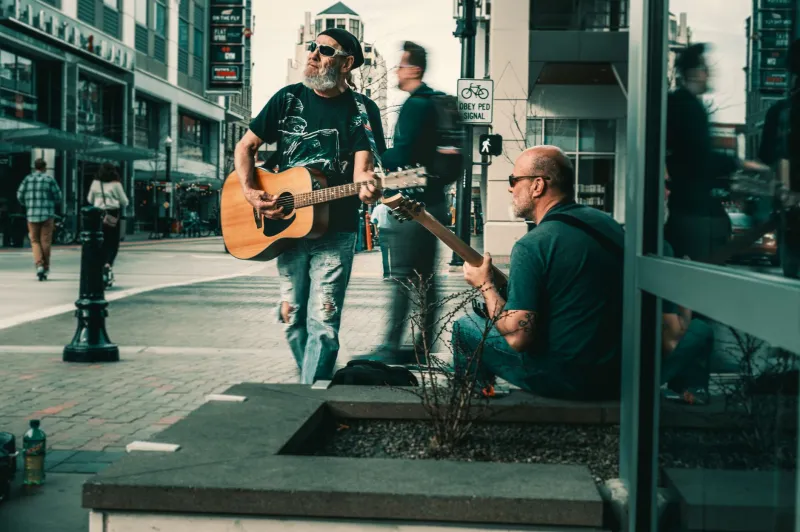
In a town of ten thousand, playing a show means something different. You can't disappear into the crowd of a hundred other acts on a given Thursday night. When you take the stage at a local brewery or a renovated downtown theater, people in the room know your name, and you know theirs. That intimacy raises the stakes in a way that a packed anonymous venue rarely does.
One multi-instrumentalist who left a promising Nashville session career to settle in Cookeville describes the shift in almost physical terms. "The first time I played a full set here and saw people I'd known for two years singing along to original songs — songs I wrote in my kitchen about things that actually happened to me — I cried. Genuinely. I hadn't cried after a show in years."
That emotional reconnection to the work isn't just personally meaningful. It tends to show up in the music itself. Artists who've stepped off the industry treadmill consistently describe a loosening — a willingness to experiment, to play longer, to follow a song wherever it wants to go without worrying whether it fits a three-minute format.
The Trade-Offs Are Real
It would be dishonest to paint this as a clean, romantic escape from a corrupt system. The musicians who made these moves are clear-eyed about what they gave up. Sync licensing opportunities, co-writing sessions with established names, the infrastructure of a major label's promotional machinery — none of that follows you to a small Tennessee town.
Income gets creative. Teaching lessons, scoring local theater productions, playing regional festivals, licensing music to small businesses and podcasters — the hustle doesn't stop, it just diversifies. Several artists describe building what amounts to a local creative economy around themselves: offering workshops, collaborating with visual artists and breweries, anchoring a local music scene rather than orbiting a national one.
"I make less money on paper than I probably could in Nashville," admits one Jonesborough-based folk artist who spent her late twenties on the fringes of the Americana circuit. "But I own my time. I own my catalog. I play shows because I want to, not because I have to impress someone who might be in the room."
Community as Creative Infrastructure
One of the more unexpected findings from talking to these artists is how much community itself functions as a creative resource. In Nashville, the music community is enormous and stratified — there are circles within circles, and breaking into the right one can feel like its own full-time project. In a smaller Tennessee city, the creative community tends to be flatter and more porous.
A guitarist who relocated to Murfreesboro describes collaborating across disciplines in ways that never happened during his Nashville years. He's scored films for local directors, written songs with a poet he met at a farmers market, and co-produced an album for a high school choir teacher who'd been sitting on original compositions for thirty years. "In Nashville, everyone's protecting their lane. Here, there are no lanes. You just make things with people."
That cross-pollination often produces work that neither party could have created alone — and it builds the kind of local cultural identity that makes a town feel like somewhere rather than just anywhere.
What Nashville Taught Them (That They Couldn't Have Learned Anywhere Else)
Here's the part that gets overlooked in the narrative of artists fleeing the industry: most of them credit Nashville with teaching them things they couldn't have learned anywhere else. The craft standards on Music Row are genuinely high. The session work is rigorous. The sheer exposure to world-class musicianship raises your own floor in ways that are hard to replicate.
"I'm a better musician because of my time in Nashville," says the Cookeville songwriter. "I just became a better artist when I left."
That distinction — between musicianship and artistry, between technical excellence and emotional truth — is the through-line in nearly every conversation. Nashville gave them the tools. Leaving gave them something to build.
A Different Kind of Success
None of the artists featured here are household names outside their regions. They're not charting on Billboard, and they're not playing arenas. But they're playing — consistently, sustainably, and on their own terms. They have audiences who show up because they genuinely want to be there, not because an algorithm served them a recommendation.
In a music industry that's been restructured so many times in the last twenty years that nobody's quite sure what success looks like anymore, that kind of grounded, community-rooted career is starting to look less like a fallback and more like a blueprint.
Tennessee has always been more than Nashville. The musicians who figured that out the hard way might be the ones with the most interesting stories left to tell.