Static and Soul: Inside Tennessee's Obsession With Restoring Vintage Radios
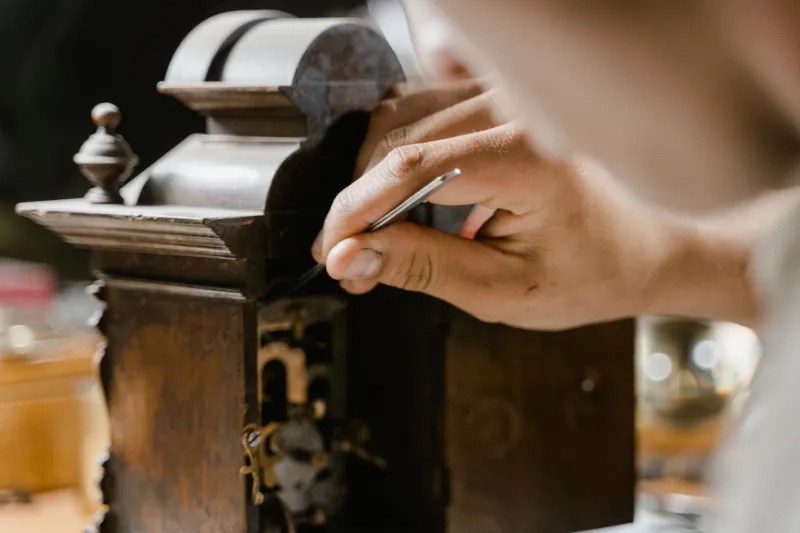
The radio on the workbench looks like a lost cause. The wooden cabinet is warped along one edge, the dial glass is cracked, and the chassis inside is caked with sixty years of dust and the residue of at least one wasp nest. Most people walking past a yard sale table would keep walking.
Dave Hensley sees something else entirely.
"That's a 1947 Zenith console," he says, not bothering to hide his satisfaction. "When this thing is done, it'll pull in AM stations from three states away. And it'll look like the day it left the factory."
Hensley, a retired electrician from Dickson, is part of a loose but passionate community of Tennesseans who restore, repair, and sometimes repurpose vintage radios and audio equipment. They're scattered across the state — in Knoxville and Memphis, in small towns along the Cumberland Plateau, in the suburbs of Nashville — connected by online forums, occasional swap meets, and a shared conviction that the objects most people consider obsolete are worth preserving.
Their reasons for doing it are as varied as the equipment they work on. But somewhere in the mix of craft, nostalgia, and stubborn practicality, something genuinely interesting is happening.
The Machines They're Saving
Vintage radio restoration in Tennessee covers a lot of ground. At one end of the spectrum, you have tabletop AM radios from the 1930s through the 1950s — cathedral-style wooden sets, Bakelite tabletop models, colorful plastic portables from the postwar boom years. These are the pieces most casual collectors encounter first, often inherited from a grandparent or discovered at an estate sale.
Further along the spectrum, you find more specialized equipment: early FM receivers, console phonographs, reel-to-reel tape machines, vintage hi-fi amplifiers and turntables. The technical demands of restoring these pieces are considerably higher, and the community of people capable of doing it well is smaller and more specialized.
What most of these objects share is a construction philosophy that's almost alien by modern standards. They were built to be repaired. Schematics were printed and distributed widely. Components were standardized and replaceable. A radio manufactured in 1948 can, with the right parts and the right knowledge, be made to work exactly as designed — and often to work better than it did when new, because modern replacement capacitors and tubes frequently outperform their original counterparts.
"These things were made to last," says Hensley. "The people who designed them assumed someone would be fixing them fifty years later. That assumption turned out to be correct, just not in the way they expected."
The Skills You Need (And Where You Learn Them)
Restoring a vintage radio is not a beginner's hobby, and the community around it doesn't pretend otherwise. At a minimum, you need a solid grasp of basic electronics — enough to understand what a capacitor does and why a failed one can take out everything around it. You need to be comfortable with a soldering iron. You need patience measured in hours, not minutes.
Beyond the basics, there's a deep well of specialized knowledge: how to identify which components are original versus replaced, how to read and interpret vintage schematics, how to safely discharge the high-voltage capacitors in older sets that can hold a lethal charge long after the power is off. This is not the kind of knowledge you get from a YouTube tutorial, though YouTube tutorials are where a lot of people start.
The more experienced restorers tend to be generous teachers. Online forums dedicated to vintage radio — the Antique Radio Forums community is the largest and most active — have a culture of detailed, patient knowledge-sharing that feels almost old-fashioned in its civility. Tennessee collectors show up regularly in these spaces, both asking questions and answering them.
In-person knowledge transfer happens too, though less formally. Swap meets and radio club gatherings — the Tennessee Valley Antique Radio Society hosts regular events — function partly as parts exchanges and partly as impromptu classrooms, where someone who's been doing this for forty years sits down next to someone who started six months ago and they talk through a problem together.
More Than Nostalgia
It would be easy to frame vintage radio restoration as pure nostalgia — a retreat into a simpler technological past. The people doing it are quick to push back on that characterization, though they don't deny that nostalgia plays a role.
"Sure, there's nostalgia," says a Memphis-based collector and restorer who focuses primarily on 1950s and '60s hi-fi equipment. "But nostalgia alone doesn't get you through six hours of troubleshooting a circuit that refuses to cooperate. That requires genuine interest in how the thing works."
For many restorers, the appeal is partly philosophical. In an era of devices designed to be replaced rather than repaired, working on equipment built to the opposite standard feels like a small act of resistance. The right-to-repair movement has brought this conversation into mainstream tech discourse, but vintage radio enthusiasts have been living it for decades.
There's also a sustainability argument that gets made, sometimes explicitly and sometimes just by implication. A restored 1950 Zenith console that works beautifully is a zero-waste outcome — nothing manufactured, nothing thrown away, a functional object extended by another generation.
The Sound Itself
Ask a vintage radio devotee why they do it, and eventually — after the talk of craft and history and sustainability — they'll get to the sound.
There's a quality to audio reproduced through well-maintained vintage equipment that's genuinely difficult to describe and almost impossible to replicate digitally. Tube amplifiers produce a warmth and harmonic complexity that solid-state electronics approach but don't quite match. A good AM radio from the late 1940s, properly restored, pulls distant stations with a clarity and presence that feels almost magical given the technology's age.
"The first time I got a 1941 Zenith console working properly and tuned in a late-night AM broadcast," says a Cookeville restorer who started the hobby after inheriting his grandfather's equipment, "I understood why people gathered around these things. It's not just sound. It's presence."
That quality — presence, warmth, the sense that something alive is happening inside the cabinet — is part of what makes restored vintage audio equipment more than a technical curiosity. It's an aesthetic experience, and it's one that a growing number of Tennesseans are deciding is worth the considerable effort required to access it.
A Community Built Around Patience
What strikes you most, spending time with Tennessee's vintage radio community, is its particular character. These are not people in a hurry. The work demands patience, and the people drawn to it tend to bring patience with them — or to develop it quickly.
There's a quietness to the hobby that feels countercultural right now. You sit with a broken object. You study it. You figure out what it needs. You fix it slowly and carefully. You listen to it work. That rhythm — problem, attention, solution, satisfaction — is available in a lot of crafts, but there's something specific about the combination of historical object, functional outcome, and actual sound that makes vintage radio restoration its own particular thing.
In Tennessee, where the relationship between technology and tradition has always been complicated and interesting, it fits right in.