When the Final Whistle Blows: Tennessee Athletes Who Found Their Second Game in the Arts
There's a particular kind of discipline that competitive sports wires into a person. Early mornings. Repetition. The willingness to fail in front of a crowd and come back swinging the next day. Most people assume that energy has nowhere to go once the uniform gets hung up for good. A growing number of Tennesseans are proving that assumption dead wrong.
Across the state — from Memphis lofts to Knoxville ceramics studios to Nashville recording booths — former athletes are channeling everything the game gave them into something nobody saw coming: a genuinely thriving creative life.
The Discipline Doesn't Disappear
Ask any coach what separates a good athlete from a great one, and they'll tell you it's not raw talent. It's the willingness to put in hours nobody sees. Turns out, that's also the secret to making art.
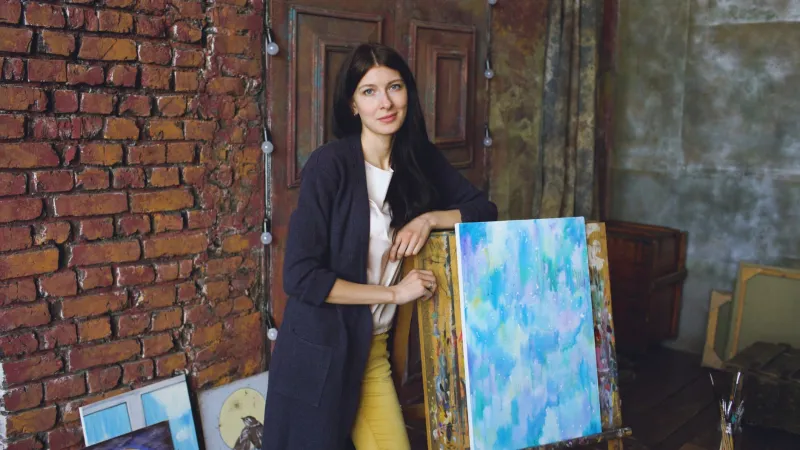
Darius Holloway spent four years as a wide receiver at a mid-sized Tennessee university before a knee injury during his junior season quietly ended his football ambitions. He didn't plan on becoming a painter. He picked up acrylics during his rehab, mostly out of boredom, and something clicked.
"Football taught me that you don't get good at anything without showing up every single day," Holloway says from his Memphis studio, a converted garage packed with canvases in various states of completion. "I treat painting the same way. I'm in here at six in the morning. I'm running drills, basically — color drills, composition drills. People think artists just wait around for inspiration. That's not how any of this works."
His large-scale work, which blends bold geometric shapes with imagery rooted in Memphis's Black cultural history, has been featured in two group shows this year and caught the attention of a Nashville gallery owner who's planning a solo exhibition for him next spring.
From the Mound to the Microphone
Not every pivot leads to a paintbrush. Some athletes find that the performance instinct — the part of them that thrives under pressure with an audience watching — translates naturally into music.
Jamie Sutton pitched two seasons in the Appalachian League, a short-season minor league circuit with teams scattered across East Tennessee and neighboring states. When his arm gave out at 24, he moved back to Kingsport and started playing open mics on Thursday nights, mostly just to have something to do.
Five years later, he's playing 150 shows a year across the region, self-releasing albums that blend Americana with a rawness he credits directly to years of high-stakes competition.
"When you're on the mound with a full count in the seventh inning, you either trust yourself or you don't," Sutton explains. "Playing a show is the same energy. You've got to commit to every note. You can't flinch."
His fanbase is modest but fiercely loyal, and he's become a fixture at festivals in Jonesborough and Johnson City, two towns that have quietly developed serious independent music scenes over the past decade.
Community Spaces Making the Crossover Possible
Individual stories are compelling, but what's really interesting is the infrastructure quietly developing around this athlete-to-artist pipeline in Tennessee.
In Nashville, a nonprofit called Second Season — founded by a former Vanderbilt basketball player — runs workshops specifically designed for athletes in transition, pairing them with working artists, musicians, and craftspeople for mentorship and studio time. The program has served over 60 participants in its first two years, and its waiting list keeps growing.
"We kept seeing the same thing over and over," says the founder, who asked to be identified only by his first name, Marcus. "These are people with incredible work ethics, incredible resilience, but nobody told them the creative world was an option for them. We're just opening that door."
In Chattanooga, a ceramics collective near the South Side arts district has seen a notable uptick in former athletes enrolling in its beginner wheel-throwing classes. The studio's director, who's been teaching pottery for fifteen years, says something about the physicality of working with clay appeals to people who've spent their lives in their bodies.
"It's tactile, it's demanding, and it humbles you fast," she says with a laugh. "Athletes actually respond really well to that. They're not afraid of being bad at something if they believe they can get better."
The Mental Health Angle Nobody Talks About Enough
There's a quieter current running through all of these stories, one that's worth naming directly. The transition out of competitive athletics is genuinely hard. Identity, routine, community, purpose — sports provide all of those things, and losing them at once can be destabilizing in ways that don't always get acknowledged.
For many of the athletes finding their way into creative work, art isn't just a hobby or a career pivot. It's a lifeline.
Holloway is candid about this. "After my injury, I didn't know who I was," he says. "Football was everything. Painting gave me back a reason to wake up with intention. That sounds dramatic, but it's just true."
Sutton echoes the sentiment. "Music saved me from a really dark couple of years. I'm not embarrassed to say that."
Second Season has begun incorporating conversations about mental health explicitly into its programming, partnering with a Nashville-based sports psychologist who works with athletes at all levels on identity and transition.
What Tennessee Gets Out of It
Here's the part that might surprise you: this isn't just good for the athletes. It's good for Tennessee's creative culture.
These are people who know how to work. They show up. They collaborate. They handle pressure. And they bring audiences with them — former teammates, hometown fans, family networks — who might not have walked into a gallery or a small music venue otherwise.
Tennessee has always had a complicated, beautiful relationship between sports and culture. Friday night lights and Saturday tailgates are practically religious experiences in this state. The idea that the same people powering those traditions might also be the ones painting murals in Memphis or recording albums in a Johnson City basement feels less like a contradiction and more like a natural evolution.
The competitive fire doesn't burn out. It just finds a new field to play on.
Know a Tennessee athlete who's made a creative pivot worth celebrating? Tell us about them at mytn50.com.